Requires: Utmost IV, SmartSpice, SmartView
Minimum Versions: Utmost IV 1.10.6.R, SmartSpice 4.10.6.R, SmartView 2.28.2.R
This example describes how to perform an extraction during the measurement
sequence and how this extracted value can be used to change subsequent
measurements. For demo purposes, the example will measure or more correctly
acquire the dataset using simulation mode, rather than using measurement mode.
The project file
acq_ex04.prj
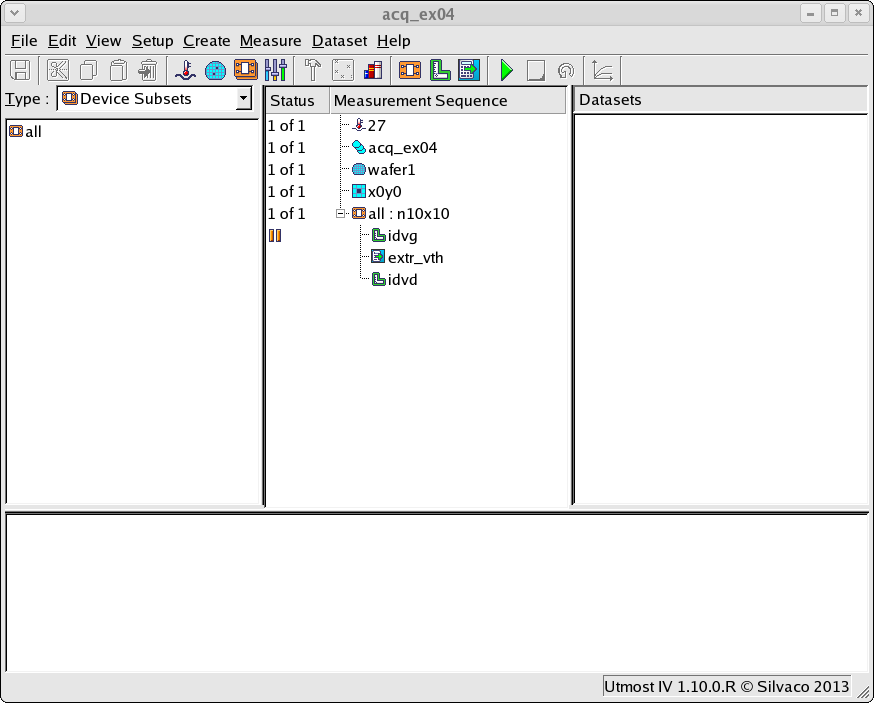
for this example should be loaded into your database. When opened, the
project will look as shown in
acq_ex04_01.png
.
When the measurement sequence is run, each step in the sequence is run in turn
for each device defined by the device subset. In this example there is only one
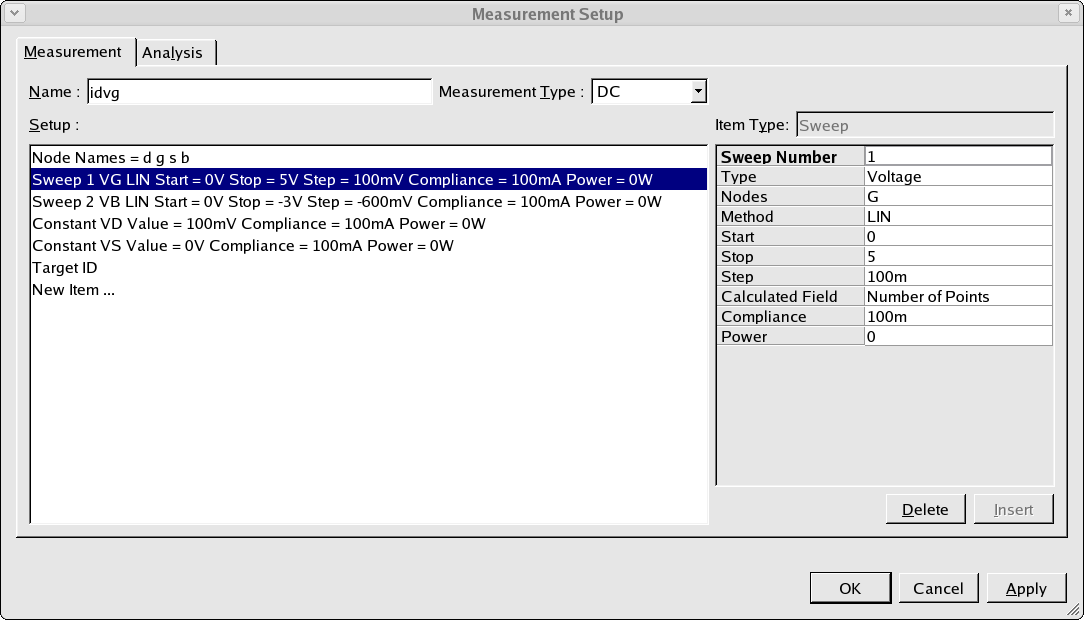
device defined. Firstly, the idvg measurement will be performed using the
measurement setup as shown in
acq_ex04_02.png
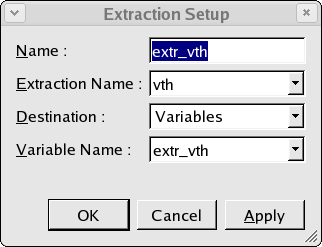
. After this is done, an extraction is performed as defined using the
extraction setup shown in
acq_ex04_03.png
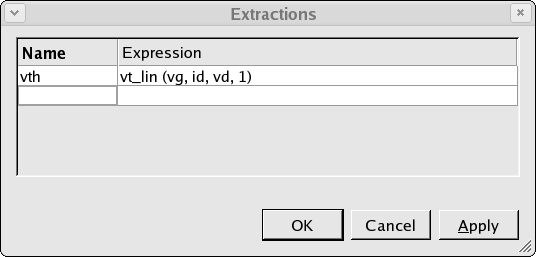
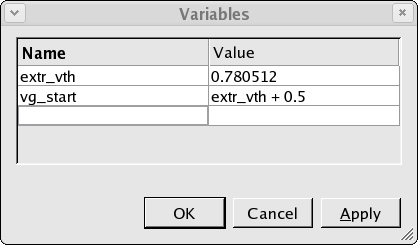
. Note that the result of the extraction is written into the variable called
extr_vth. The extraction itself is defined in the extractions dialog as shown in
acq_ex04_04.png
.
Once the extraction is done the result will be written into the variable called extr_vth
in the variables dialog as shown in
acq_ex04_05.png
. A second variable called vg_start is defined as the value of the extracted threshold
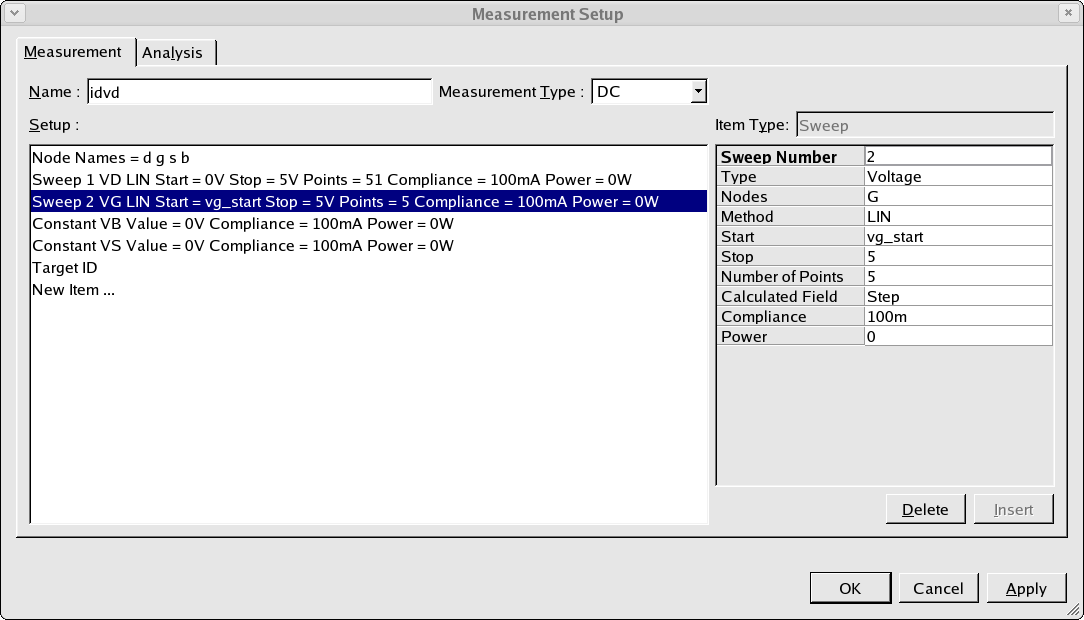
voltage plus 0.5 volts. It is this vg_start variable which is subsequently used in the
idvd measurement which is defined as shown in
acq_ex04_06.png
. When this measurement is performed, the value of the vg_start variable is substituted
into the setup and this is automatically stored into the database.
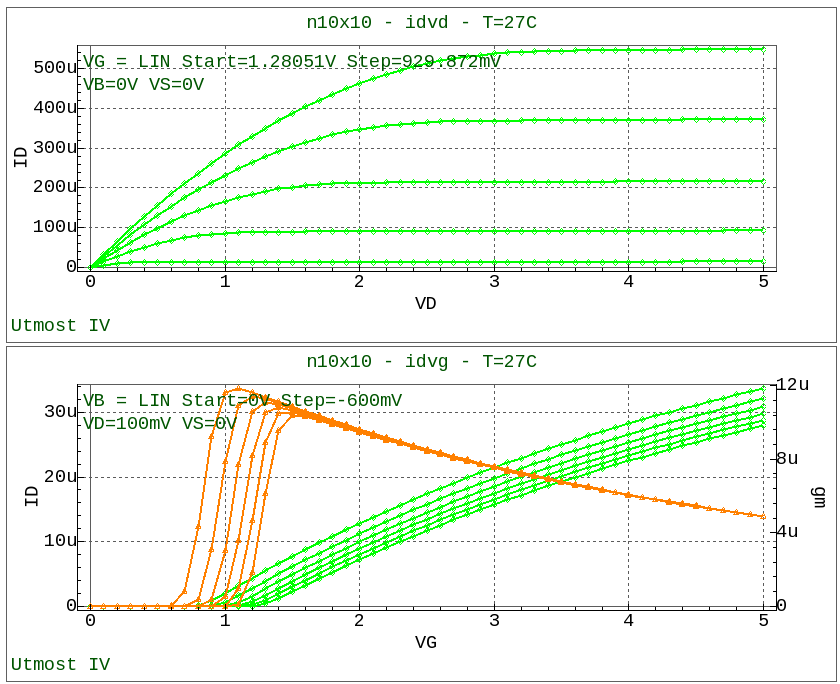
A plot of both measured datasets is shown in
acq_ex04_07.png
.
By using extractions and variables in this way, the result from one measurement can be
used to modify any subsequent measurements.
Graphics