



TCAD
Home » Products & Workflows Hub » AI-Driven Manufacturing » TCAD
TCAD simulation for semiconductor process and device development
What is TCAD simulation?
What it shows that measurement can't
Sweep a power device into reverse bias and the curve gives you its breakdown voltage. It won’t give you the cause. Simulation will: you see the region where impact ionization runs away first, somewhere no probe can reach.
What it replaces
Split lots. Change the layout, a process step or the bias condition in software and watch what moves. You can switch individual physics models on and off, too. When the simulation lines up with your measured data, you’re close to the root cause.
Where the results go
Silvaco TCAD tools
Process Simulation
Builds the device structure by simulating the fab steps that make it.
- Monte Carlo and analytical implantation, with diffusion and oxidation models calibrated for silicon and SiC
- Physical etch, deposition and epitaxy, plus lithography and stress, in 1D, 2D or 3D as the step requires, straight from a GDSII layout
- Add your own physics and materials through the Open Model Interface and Open Material Database
Device Simulation
Predicts how that structure performs: current and voltage, heat and light.
- Drift-diffusion and energy-balance transport, solved for DC, AC and transient conditions
- Add-on modules for self-heating, optics, and radiation and single-event effects
- Mixed-mode runs inside a SPICE netlist, on a multi-threaded solver that distributes across machines
Quantum Device Simulation
Takes over at the scale where continuum models give out.
- Tight-binding band structure and self-consistent Schrödinger-Poisson
- NEGF quantum transport with phonon, surface-roughness and impurity scattering
- Covers GAA-NS-FET, FinFETs, nanowires, 2D materials, quantum dots
Meshing
Gives the device solver a mesh it can converge on.
- 2D and 3D remeshing with Delaunay or conformal schemes and automated refinement
- Solid modeling to crop, mirror, stretch or build a structure from scratch
- Reads Victory Process output and Silvaco structure files, and exports .stl and .vtk
Parasitics
Pulls resistance and capacitance out of the geometry your process really produced.
- Physics-based 3D field solver for arbitrary shapes, including devices at angles other than 45° and 90°
- Adaptive mesh refinement to the accuracy you specify, so runtime goes where it's needed
- Back-annotates the netlist with node names, resistances and capacitances
SPICE Model Extraction
Turns measured or simulated data into compact models for circuit simulation.
- Instrument-driven characterization and DoE-driven parameter extraction
- Compact models including BSIM-CMG, BSIM4/6, HiSIM and PSP, with FinFET and GAAFET support
- Verification in SmartSpice, and models that run in HSPICE, Spectre, Eldo, LTspice and QSpice
TCAD simulation by device and technology
Each device class fails for its own physical reasons. Start from yours.
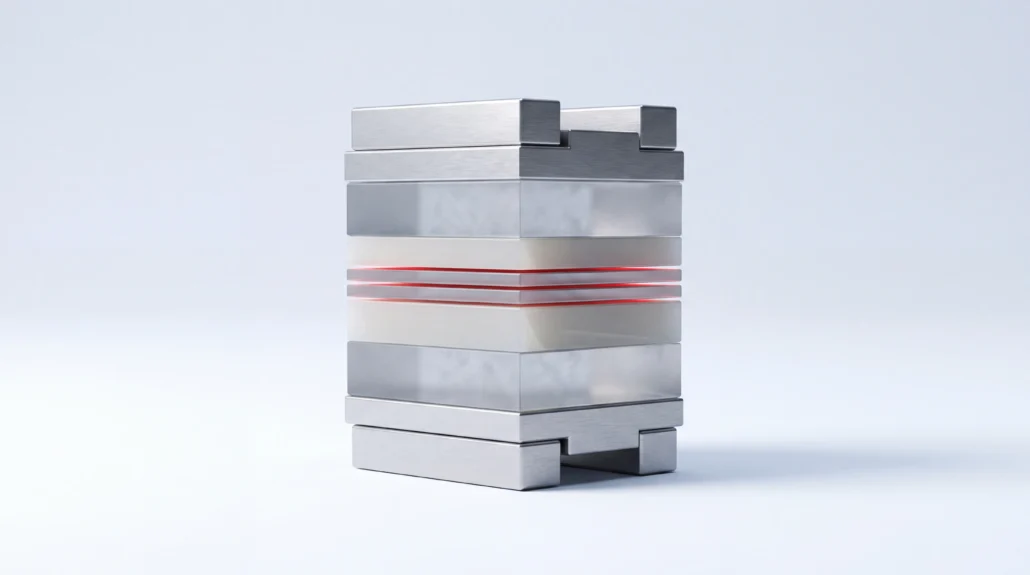
Power devices
SiC, GaN, IGBT and trench MOSFET
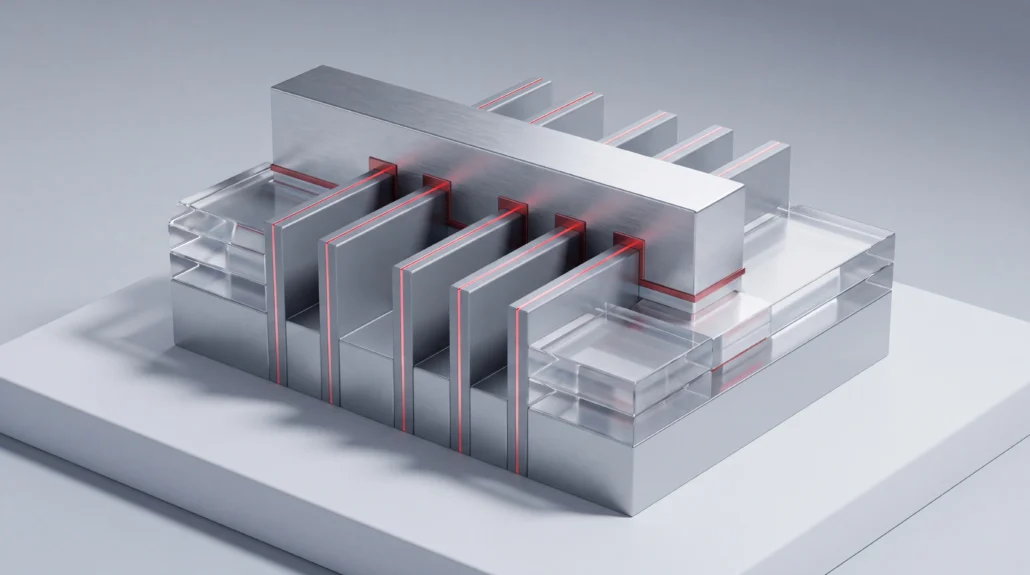
Advanced CMOS and FinFET
Where 3D geometry sets the electrostatics

GAA and CFET
Where quantum confinement calls for atomistic modeling
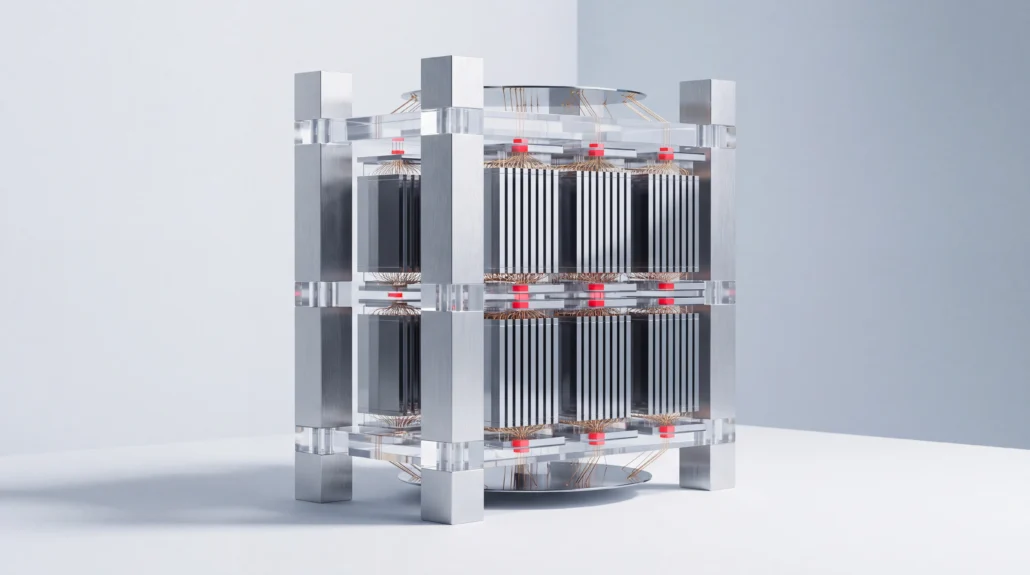
DRAM and NAND
Cell structures and what moves their retention
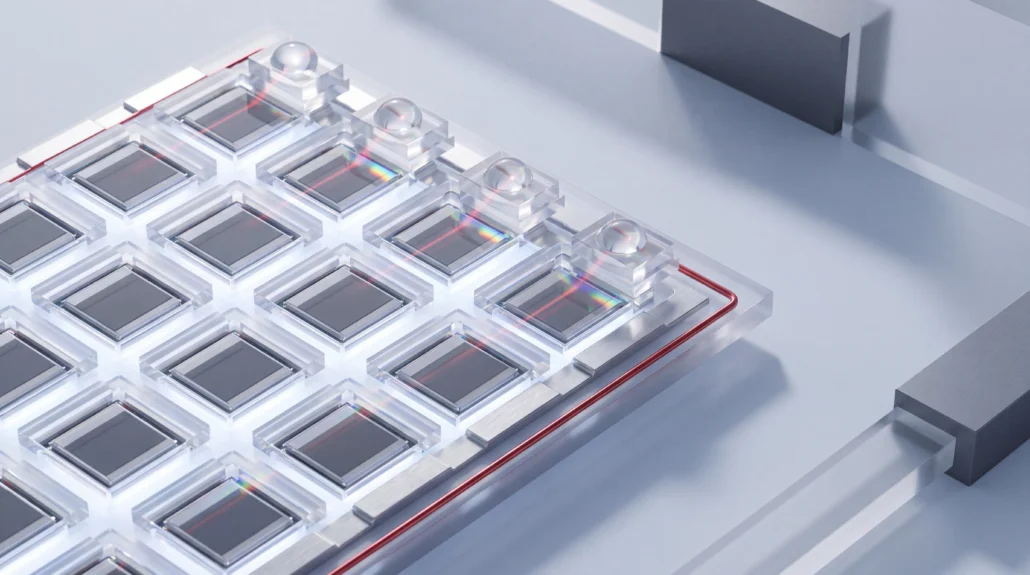
CMOS image sensors
Pixel optics and electrical response in one run
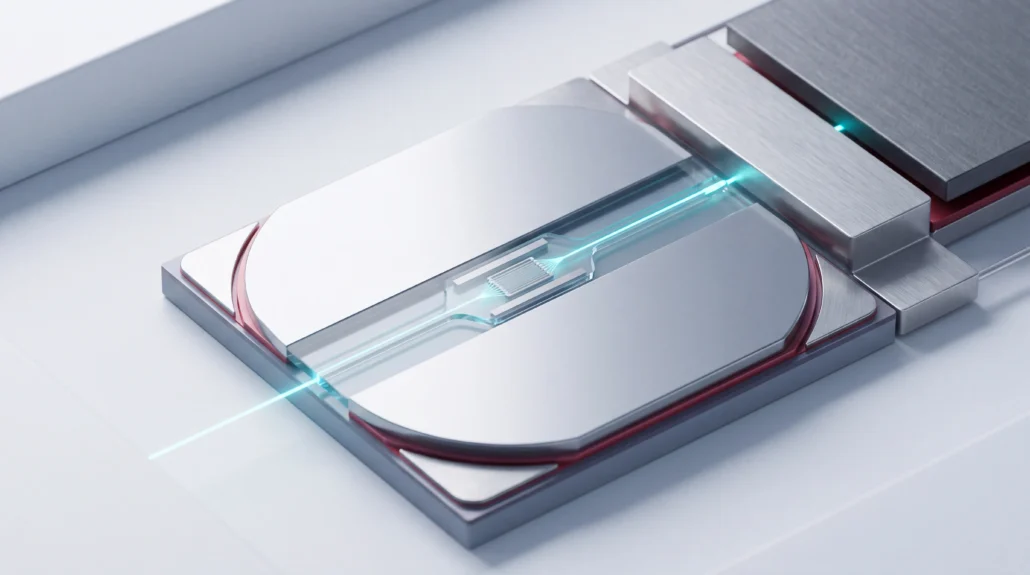
Photonics and optoelectronics
Lasers, modulators, waveguides and detectors
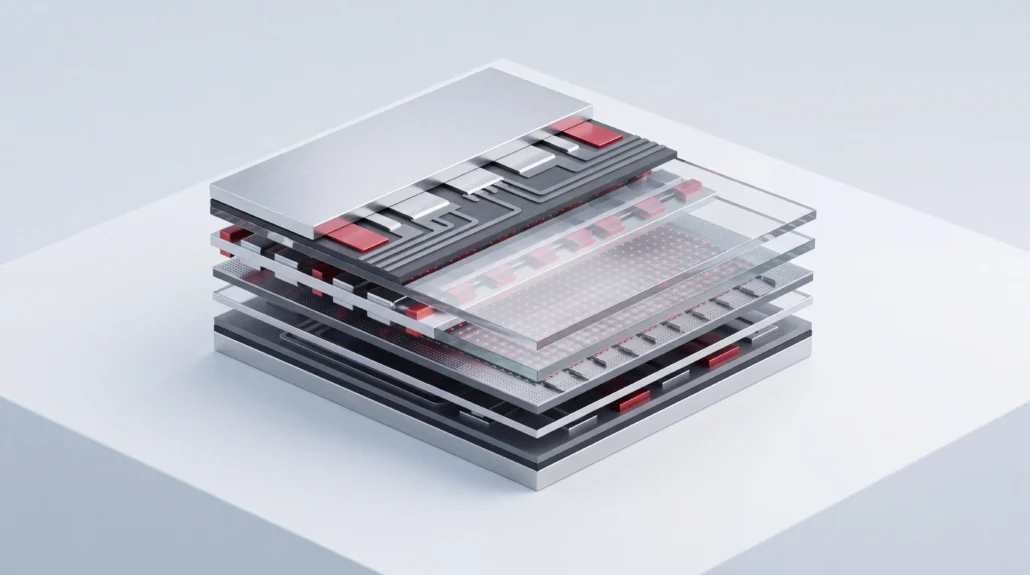
Display and OLED
TFT backplanes, LED and OLED devices
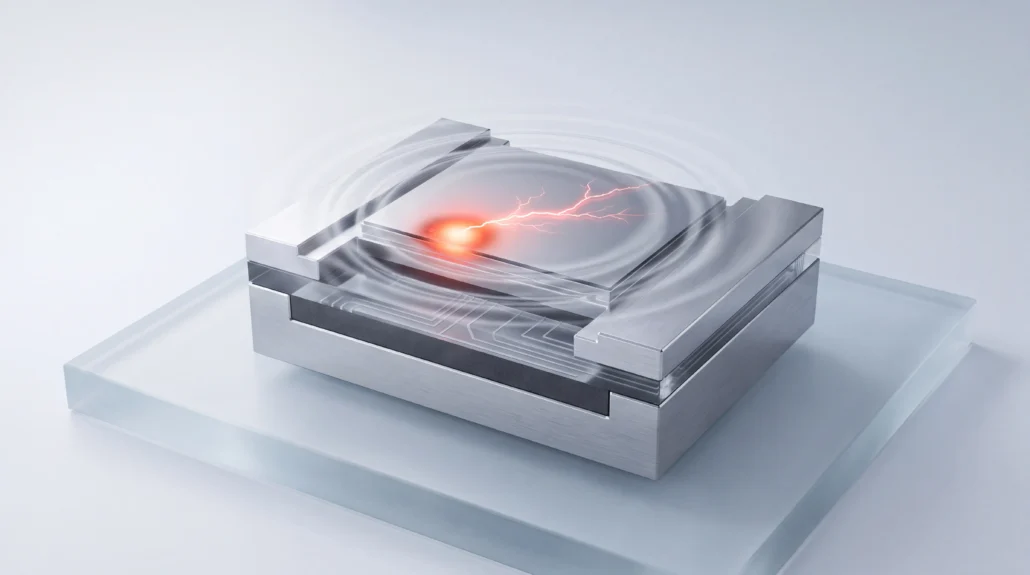
Radiation and reliability
Total dose and single-event effects
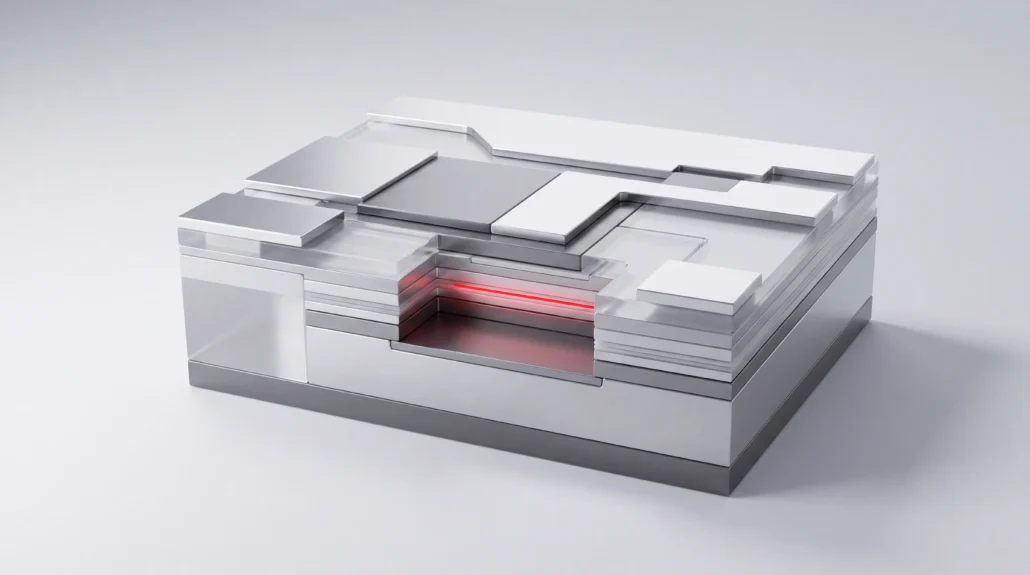
Compound semiconductors
III-V and wide-bandgap material systems
Solar
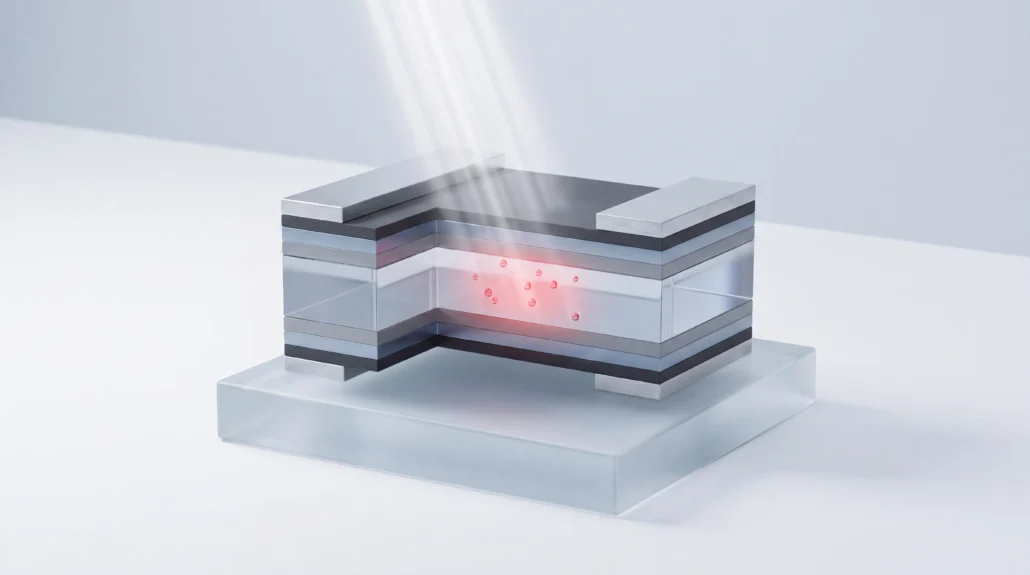
Cell structures and light absorption
Foundry, PDK and platform support
Foundries and process design kits
Victory Process works from your process definition and layout, not from a foundry kit. That lets you model a process before its PDK exists, or generate a virtual, process-based PDK ahead of first silicon. Foundry PDKs are what Silvaco’s analog and custom design tools rely on, and current kits cover ams AG, Tower Semiconductor, X-FAB and YITOA Micro Technology processes from 130 nm to 600 nm. That’s a sample, so ask about yours.
Operating systems
Every tool in the 2025 baseline runs on 64-bit Linux, and most on Windows: Red Hat Enterprise Linux 7, 8 and 9, CentOS 7, Rocky Linux 8 and 9, and Windows Professional 10 and 11. Victory Atomistic is the Linux-only exception. Linux installs also need a short list of 32-bit compatibility and font packages, set out in the installation guide.
Multi-core, cluster and GPU
Customers building on Silvaco TCAD
More than 400 customers, from university labs to Tier 1 semiconductor companies, run their TCAD
work on Silvaco. That includes eight of the top ten display manufacturers.
October 2025
Power devices
Vicor
Took its power-module device modeling from 2D to 3D Victory TCAD, so simulations follow the real device geometry and design iterations drop.
July 2025
GaN
Wavetek
Chose Victory TCAD to develop GaN devices for 5G, Wi-Fi and IoT connectivity.
April 2025
Silicon photonics
ProMOS Technologies
“Silvaco’s product leadership, service, and technical support were instrumental in our decision to select Silvaco for our photonic device development, helping us accelerate the pace of our innovation.”
Lynn Lin, Vice President, ProMOS Technologies
March 2022
CMOS image sensors
Teledyne e2v
“The Victory TCAD solution enables us to quickly analyze different pixel structures. The impact of different geometries can be easily explored in order to identify the key parameters that affect performance.”
Ana González Márquez, Director of Technology & Product Development, Teledyne e2v
SK Powertech on SiC, Fraunhofer ISIT on GaN and more in Silvaco news
Current release
Silvaco TCAD 2025 baseline
All six tools ship in the 2025 baseline, covered in the December 2025 Simulation Standard. Victory Process gains upgraded solvers and meshing, with 56–75% speed-ups on parts of the simulation. Victory Device adds multiphysics thermal and optical runs, Victory RCx models resistivity node by node, and most of the suite now runs natively on Windows.
Versions in this baseline
Victory Process
8.57.5.R
Victory Device
2.0.1.R
Victory Atomistic
1.12.0.R
Victory Mesh
1.12.0.R
Victory RCx
1.4.6.R
Utmost IV
2.24.0.R
Versions update during the year. Download with your customer account through Support and Downloads.
Recent TCAD papers and webinars
Open to read, with no registration.
Simulation Standard
September 2026
Predictive TCAD Modeling of Normally-Off p-GaN HEMTs for Dynamic RDS(on), Leakage, Breakdown, and ML-Based Design Exploration

Webinar
TCAD-Aware SPICE Model Extraction with Utmost IV: From Manufacturing to Surrogate Circuit Modeling
Simulation Standard
TCAD Breakdown Simulation of a 1200 V Vertical GaN FinFET
Webinar
Fast and Integrated Quantum Transport Solution for GAA-NS-FET Design Exploration & Optimization at Full-Device Scale
Universities and research
Silvaco TCAD for teaching and research
Accredited, degree-granting institutions get a licensing track of their own. The TCAD Academic Omni License reaches every TCAD framework under a single license, research licenses are priced low, and curriculum packages cover an entire class. Over 200 universities already teach and research with Silvaco software.
Teaching material is included: the example library carries the Plummer–Griffin process examples and an Arizona State University device set. Software updates come with the license; technical support stays with your institution.
Licensing and support for TCAD software
Licensing options
Victory Omni covers every TCAD framework except Interactive Tools, one tool at a time, on a single annual fee that applies across your sites in the purchasing region. You can pair it with term licenses for individual tools. Time-Based Licensing leases run one, two or three years with updates and support built in. All licenses float from a network license server, and virtual machines can’t act as that server.
Installation and OS support
Supported on 64-bit Linux and on Windows 10 and 11. Licenses are served by SFLM 7.4.16.R or a third-party FlexLM 11.19.2.R server, and the installation guide walks you from download through license setup to registration.
Documentation
Per-tool release notes for the 2025 baseline, the hardware requirements sheet and the installation guide, with worked examples sorted by tool and by application.
Support portal
Open a case under a current maintenance contract and follow it through to resolution. Your downloads sit in the same portal.
Bring the device that isn't behaving
Send the layer stack and the effect you can’t explain. An application engineer will point
you to the tools that fit, or say plainly if TCAD isn’t the answer.
TCAD simulation questions
What is TCAD simulation used for?
Process and device development before wafers are committed. TCAD simulation settles in software the questions you'd otherwise run a split lot to answer: how an implant dose change shifts threshold voltage, where a device breaks down, why one geometry leaks more than another. It also generates the compact SPICE models circuit designers build with.
What is the difference between process simulation and device simulation?
Victory Process with Victory Device, and usually in 3D, because breakdown in a power device follows geometry that a 2D cut can misrepresent. That's why many of our customers moved its power-device modeling to 3D Victory TCAD. Victory Mesh refines the structure, and Utmost IV turns measured parts into SPICE models.
How accurate is TCAD simulation?
Calibration decides it, far more than the solver does. Fit the models to your own measured silicon with Utmost IV, then test them on data they weren't fitted to. The agreement you see on that held-out data is the accuracy you can plan around.
Which Silvaco tool should I use for power devices?
TCAD accuracy depends more on calibration than on the solver itself. Calibrate process and device models to measured data, then validate them on conditions that were not used during calibration. The agreement achieved during validation is the accuracy you can plan around.
Does Silvaco TCAD support SiC and GaN?
Yes. Victory Process includes calibrated silicon carbide oxidation, and Victory Device's material parameters cover compound semiconductors alongside silicon. SK Powertech adopted it in 2023 for SiC power work and Wavetek for GaN connectivity parts, and Fraunhofer ISIT is collaborating with Silvaco on GaN.
What replaced Athena and Atlas?
In Silvaco's current TCAD flow, Victory Process handles the fabrication steps and Victory Device handles the electrical behavior. Victory Device accepts legacy Atlas input, which means an existing deck gets migrated rather than rebuilt from nothing.
Which foundry PDKs are available for Silvaco TCAD?
None is required. Silvaco TCAD starts from a process description and a layout rather than a foundry kit, which is how teams model processes that don't have a PDK yet. Foundry kits matter on the circuit-design side, for Silvaco's analog and custom IC tools, where the published sample spans X-FAB, Tower Semiconductor, ams AG and YITOA processes.
Can I run Silvaco TCAD on a GPU?
Silvaco designs its TCAD solvers for GPU and CPU performance, with the aim of checking more of the design space per run. How much a GPU helps depends on the tool and the simulation type, so confirm it for your case with an application engineer. The NVIDIA collaboration announced in 2026 extends this work to physics-based digital twins.
Is Silvaco TCAD available for university research?
Yes, on academic terms rather than commercial ones: low-cost research licenses, curriculum packages for teaching, and a TCAD Academic Omni License that reaches every framework. Updates are included with the license. More than 200 universities take part, and any accredited, degree-granting institution can apply through the University Program.